![[Logo] Your source for EUC, Ebike accessories and lithium fire safety.](https://images.leadconnectorhq.com/image/f_webp/q_80/r_1200/u_https://assets.cdn.filesafe.space/25fElMd921Ylg1W3ctDz/media/6726aa8238b82f2b2f399cab.png)
For EUC, E-Bike & PEV Riders
Lithium Battery Fire Safety
What every EUC, ebike, Onewheel, and emoto rider needs to know ... before a fire starts.
Nowadays it seems everything is powered by Lithium Batteries
Lithium-ion batteries power everything from electric unicycles to ebikes to emoto bikes — and they've changed how we ride. But they come with a risk that standard fire safety equipment isn't designed to handle. This guide covers everything a lithium-powered rider needs to know: why lithium fires are different, how to prevent them, what to do if one starts, and what the right extinguisher actually is.

EUC

ESK8

E-BIKE

E-MOPED

E-MOTO

E-SCOOTER

ONEWHEEL
Why Lithium Battery Fires Are Different
Standard fire safety knowledge doesn't fully apply to lithium-ion batteries. Once a cell enters thermal runaway, it generates its own oxygen and heat — which means smothering agents and CO2 won't stop it.
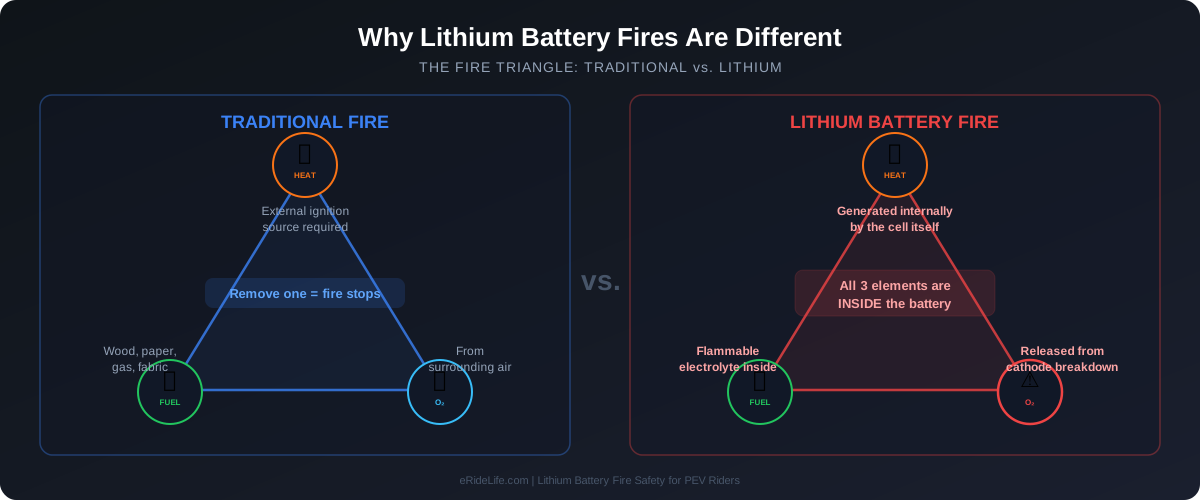
Lithium fires carry increased risks over traditional fires.
Thermal runaway is a self-sustaining chain reaction triggered when a battery cell overheats. One failing cell heats the cells next to it — which fail, heat more cells, and so on. It can accelerate in seconds and reignite hours after the fire appears out.
Reignition Risk
Even after flames are out, a battery can reignite hours later because the internal reaction hasn't stopped.
Hydrogen Fluoride Gas
Burning lithium batteries release toxic HF gas. Most extinguishing agents don't address this hazard.
Extreme Heat
Lithium fires can exceed 1,000°F — far beyond what surface-smothering agents can cool effectively.
CO2 Failure
CO2 displaces oxygen but doesn't cool battery cells. Once it dissipates, the hot battery reignites.
THE RIGHT TOOL
What Type of Fire Extinguisher Should You Use for Lithium Battery Fires?
This is one of the most common questions in lithium fire safety — and the answer matters. The right extinguishing agent must do three things standard agents can't: penetrate the battery cells, cool thermal runaway from the inside, and address toxic byproducts like HF gas.
We choose FCL-X for the following reasons.
No PFAS or harmful residue.
Proven effective in EV and battery storage fires
Stops lithium-ion battery reignition
Reduces toxic exposure like HF

Lithium Fire Prevention Tips for Riders
Most lithium fires are preventable. These habits apply to EUC, ebike, Onewheel and emoto owners.
Never leave batteries charging unattended overnight
Use only the charger that came with your device — or manufacturer-approved alternatives
Charge in an open area, away from flammable materials
Let the battery cool for at least 30 minutes after a hard ride before charging
Stop using a battery that has swollen, cracked, or been in a crash
See FCL-X Applied in Real PEV Battery Fire Scenario
This footage shows FCL-X being applied during a scooter battery fire scenario.
Results vary based on conditions and application.
Frequently Asked Questions
Commercial Lithium fire Safety
Protect Your Charging Space Before a Fire Starts
The FCL-X extinguisher is the tool we trust with our own equipment — and the one we recommend to every rider.

Based in Denver, CO, we specialize in lithium-ion battery fire safety education and solutions that support the electric mobility lifestyle.


Copyright 2026 eRideLife
All Rights Reserved