![[Logo] Your source for EUC, Ebike accessories and litium fire safety.](https://images.leadconnectorhq.com/image/f_webp/q_80/r_1200/u_https://assets.cdn.filesafe.space/25fElMd921Ylg1W3ctDz/media/6726aa8238b82f2b2f399cab.png)
Into the Fire: One Rider's $200,000 Wake-Up Call
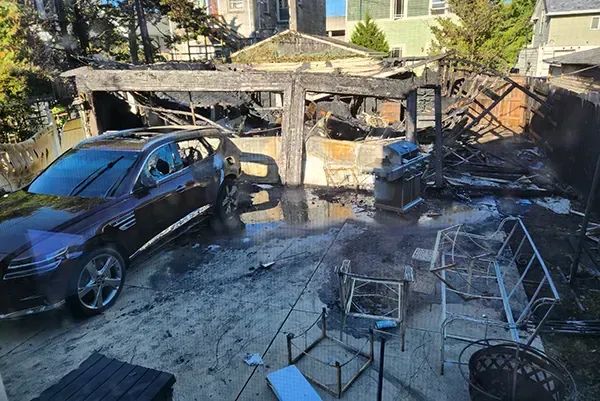
Jerry Bloodworth thought he was being careful. He charged his electric scooter in a detached garage, away from the house. He used the original charger. He hadn't modified anything. On August 28, 2025, he lost a three-car garage, two vehicles, and nearly his home anyway.
It was 10:30 at night when the pounding started.
Jerry Bloodworth and his wife had just gone to bed at their home in Racine, Wisconsin when their houseguest burst through the door. There's a fire. The garage is on fire. Should I call 911?
Jerry threw on his clothes and ran downstairs. What he found when he got outside would cost him nearly $200,000, traumatize his family for months, and permanently change how he thinks about the devices he loves.
The culprit, investigators would later determine, was a lithium battery in a high-powered electric stand-up scooter, plugged into an outlet on the north wall of his garage for over 24 hours.
It Spreads Faster Than You Think
"The fire chief told me that when those batteries fail, it's almost like a small phosphorus grenade going off," Jerry recalls. "It shoots out fire. It sticks to stuff."
By the time Jerry got outside, the fire had already moved beyond the scooter. He grabbed the garden hose but couldn't connect it in the dark without his glasses. That cost him a minute he didn't have.
When he saw the tonneau cover on his Ford F-150 catch fire, he made a split-second decision. He grabbed the keys, got in the burning truck, and drove it out of the driveway into the street.
"I burnt the heck out of my hand," he says. "Then I went back for the Genesis, and it was too late."
His 2017 Harley-Davidson Road Glide, his 2005 Jeep Wrangler, his tools, his lawn equipment, all of it gone. His neighbor's siding melted. The PVC fence on the other side dissolved completely. Three neighbors sustained property damage. The fire was hot enough that the stucco on his own house, just feet away, looked completely untouched, because the radiant heat was going outward, not inward.
The fire department arrived within six minutes. They contained it. At 2:30 in the morning, as the electric company was working to restore power to the neighborhood, the fire reignited, right where the Jeep Wrangler had been.
A second three-alarm response. This time they finished it for good.
"I Wasn't Aware of the Magnitude"
In the days that followed, investigators from both the fire department and Jerry's insurance company combed through the debris. The battery, when they finally accessed it, told the story clearly.
His insurance company explored subrogating the claim to the scooter manufacturer, essentially pursuing them for the damages. It went nowhere. The scooter had passed through two previous owners. Without knowing whether the battery had been modified, exposed to water, or otherwise damaged along the way, there was no clean chain of liability to pursue. And as Jerry notes dryly: "A lot of these manufacturers are in China anyway. Good luck getting money from them."
When asked whether he'd known about the risks beforehand, Jerry doesn't hesitate.
"That is a very true statement. I was not aware of the magnitude of what these batteries could do."
He's not alone. Most people in the personal electric vehicle community, and the vast majority outside it, underestimate the specific danger profile of lithium battery fires. They burn hotter than conventional fires. They can reignite hours after appearing to be extinguished. Water, the default response to any fire, can actually intensify an electrical fire rather than suppress it.
And the toxic smoke produced by burning lithium cells and the plastics surrounding them can be as dangerous as the flames themselves.
"If the fire doesn't kill you," Jerry says, drawing on his professional background in plastics, "the toxins will."
We covered the science behind why water and standard extinguishers fail on lithium fires in detail in our interview with FCL-X co-founder Shane Bentley. Read it here: Why Most Fire Extinguishers Won't Save Your EUC, Onewheel, or E-Bike.
What He'd Tell You Now
Jerry still rides. He recently unboxed an InMotion V9, UL certified, chosen deliberately. He charges it only when he's home and awake. He won't leave anything plugged in overnight.
But the bigger lesson, he says, isn't just about charging habits.
"Have something to extinguish it. We know that water doesn't work on electrical fires — if anything it increases the intensity. But if I have a tool that gives me a chance to stop it while it's small, I'm going to use it. I drove my truck on fire down the driveway. I'm willing to take that chance, but I need the tool to do it."
He has specific advice for anyone charging PEVs at home:
Charge only when you're home and awake. Never leave a lithium device charging overnight or unattended for extended periods.
Choose your charging location carefully. A detached structure can save your home. But concrete walls are better than wood. Think about what surrounds your charging area.
Get a smoke or heat detector in your charging space, ideally one that alerts your phone so you know immediately if something changes.
Have a proper extinguisher rated for lithium battery fires within reach of your charging area. A small kitchen extinguisher won't cut it. You need the right tool for the specific chemistry of what's burning. See our full breakdown: 10 Reasons Every PEV Owner Needs a Lithium Fire Extinguisher.
Inspect for water damage. Water ingress is one of the leading causes of delayed lithium battery failure. A wheel that got wet and seemed fine can fail catastrophically weeks later.
Buy UL certified devices when possible. It costs manufacturers more. It costs you more. It exists for a reason.
These six recommendations and more are covered in the eRideLife Lithium Battery Safety Checklist, along with sections covering everything from charging location to emergency response.
Not sure if you're making the right charging decisions? See our guide: 8 Lithium Battery Charging Mistakes That Increase Fire Risk.
The Thing Nobody Is Talking About
What strikes you talking to Jerry is not bitterness. It's clarity. He lost nearly $200,000 in property. His wife experienced real PTSD. His neighbors filed claims. And he's still riding, still advocating for the community, still evangelizing the joy of personal electric vehicles to anyone who will listen.
"I just hope nobody has to sit where I'm sitting," he says. "These things are incredible. They're a joy. But you have to understand what you're dealing with."
The personal electric vehicle industry is growing faster than the safety conversation around it. Lithium battery fires in e-bikes, scooters, and electric unicycles have become a measurable problem in cities across the country. Fire departments are updating their protocols. Insurance companies are adjusting their policies.
And most riders still don't have a lithium-rated fire extinguisher anywhere near their charging setup.
Jerry Bloodworth does now.
eRideLife carries lithium battery fire extinguishers specifically rated for PEV charging environments.
Safety Disclaimer: This article is for educational purposes only. In any fire emergency, call 911 immediately. Only attempt to suppress a fire if it is small, you have a clear and unobstructed exit behind you, you are not exposed to toxic gases, and you have the correct equipment. Never place yourself or others at risk to save property. If conditions are unsafe or the fire is growing beyond your control, evacuate immediately and leave firefighting to the professionals.
Have a fire safety story you're willing to share? We're building a library of firsthand accounts to help educate the community. Get in touch.